Compatibility
What Size Pressure Canner Do I Need? 16 or 23 Quarts
For most home canners, the choice is 16 or 23 quarts. Presto says both hold the same 7 quart jars. The quart number is how much liquid the pot holds, not how many jars. A 23-quart pot adds stacked pints and room for water bath quarts. A 16-quart pot is shorter. A pot that holds fewer than four quart jars falls short of what the USDA's instructions assume.
Disclosure: This page contains affiliate links (marked with *). If you buy through them, we earn a small commission at no extra cost to you. As an Amazon Associate I earn from qualifying purchases. Learn more
The short answer
Buy 23 quarts if you can stacked pints or want water bath quarts in the same pot. Buy 16 quarts if you only pressure can quarts or need a lower pot, since Presto says both hold 7 quart jars. Don't go below a canner that holds four quart jars upright with the lid on, because the USDA has no instructions for canning in smaller pressure cookers.
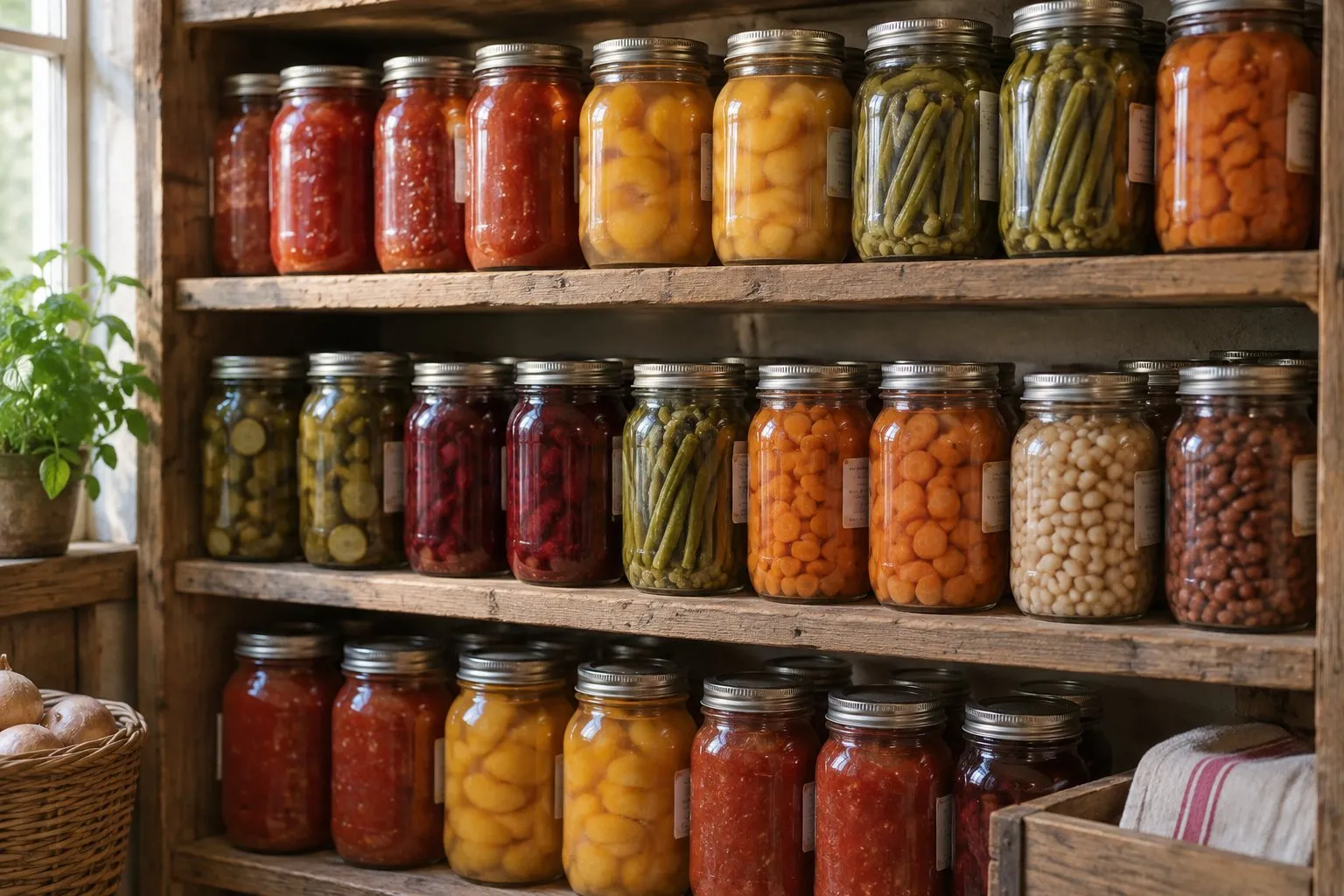
Here is a common surprise in canning: you double the size of the pot, and the number of quart jars stays the same. Once you know why, the choice gets easy.
Which size fits what I want to do?
| What you want to do | Size that fits | Why |
|---|---|---|
| Pressure can quart jars | 16 or 23 quarts | Presto says both hold 7 quart jars |
| Pressure can lots of pints | 23 quarts | Presto says 20 regular-mouth pints stacked, against 10 in the 16-quart |
| Water bath quarts in the same pot | 23 quarts | Presto says the 16-quart isn't tall enough to cover them |
| Save height or storage room | 16 quarts | Presto lists it at 12 inches high, against 15.5 |
| Can small batches | Four quart jars or more | That is the minimum; see below |
| Can in very large batches | 30 quarts or more | Only tall designs stack quarts, and they are heavy |
Why aren't quarts of water the same as jars?
The number on the box is how much liquid the pot holds. Presto's charts call it "liquid capacity." You never fill a canner with water that way.
As we read the charts, the floor of the pot sets the quart count. That's why both Presto sizes stop at seven. The extra height of the 23-quart lets pints sit in two layers, which Presto calls double-decking. It also leaves room for water over quart jars in water bath canning. The USDA describes the same pattern: most canners hold seven quart jars or eight to nine pints, and some large ones hold 18 pints in two layers but only seven quarts.
How do the sizes compare?
These counts come from each maker's own document and can vary with jar style. Don't force jars to fit.
| Canner | Liquid capacity | Quart jars | Pint jars | Source |
|---|---|---|---|---|
| Presto 01755 | 16 quarts | 7 | 10 regular mouth | Presto |
| Presto 01781 | 23 quarts | 7 | 20 regular mouth, stacked | Presto |
| All American 910 | 10.5 quarts | 4 | 7 | All American |
| All American 915 | 15.5 quarts | 7 | 10 | All American |
| All American 921 | 21.5 quarts | 7 | 18 | All American |
| All American 925 | 25 quarts | 7 | 19 | All American |
| All American 930 | 30 quarts | 14 | 19 | All American |
| All American 941 | 41.5 quarts | 22 | 30 | All American |
An older All American manual copy gives some different counts. Check the current manual, and see our All American page. For plug-in machines, see electric canner sizes, since their charts differ.
| Comparison | Our pick for stovetopPresto 23-Quart Stovetop (01781) | Shorter stovetop potPresto 16-Quart Stovetop (01755) |
|---|---|---|
| Type | Stovetop pressure canner with dial gauge | Stovetop pressure canner with dial gauge |
| Pressure canning | Yes | Yes |
| Water bath | Yes, quarts and smaller, per Presto | Pints and smaller only, per Presto |
| Liquid capacity | 23 quarts | 16 quarts |
| Jars per load | 7 quarts, or 20 regular-mouth pints stacked | 7 quarts, or 10 regular-mouth pints |
| Altitude | You raise the pressure by altitude from the USDA tables. Water bath times also change with altitude. | You raise the pressure by altitude from the USDA tables. Water bath times also change with altitude. |
| Price class | Mid-range | Mid-range |
| Best for | You want to pressure can low-acid foods (vegetables, meat, chicken, fish) and can stay near the stove. | You pressure can quarts and do not need water bath quarts in the same pot. |
| On Amazon(paid link to Amazon, opens in a new tab)Ad · paid link · check price & delivery on Amazon | On Amazon(paid link to Amazon, opens in a new tab)Ad · paid link · check price & delivery on Amazon |
What do we recommend?
If you're not sure, buy the 23-quart. It holds the same number of quarts and gives you more options. The weight difference is small: Presto lists 10.32 pounds against 9.25. The 23-quart stovetop page covers it in depth.
Presto
Presto 23-Quart Stovetop (01781)
A pot for your stove, the kind the USDA's canning steps were written for.
- Type
- Stovetop pressure canner with dial gauge
- Pressure canning
- Yes
- Water bath
- Yes, quarts and smaller, per Presto
- Liquid capacity
- 23 quarts
- Jars per load
- 7 quarts, or 20 regular-mouth pints stacked
- Altitude
- You raise the pressure by altitude from the USDA tables. Water bath times also change with altitude.
- Price class
- Mid-range
Stated in: Presto Canner Comparison Guide (2025), read 2 November 2026
Why here: Presto says it holds as many quart jars as any standard pot here, plus stacked pints and water bath quarts. It is mid-range in price.
Best for: You want to pressure can low-acid foods (vegetables, meat, chicken, fish) and can stay near the stove.
- The National Center's advice was written for stovetop canners
- Seven quart jars, or up to 20 regular-mouth pints stacked, says Presto
- Also works as a water bath canner for quarts and smaller, says Presto
- Works on gas and on electric coil and smooth-top ranges, says Presto
- You watch the gauge and adjust the heat yourself
- The dial gauge needs an accuracy test every year, says Presto
- Presto does not list induction for this pot. The 01784 is its induction version
Choose the 16-quart Presto 01755* (paid link) if height is what you lack and you don't need water bath quarts in this pot.
How small is too small?
The National Center for Home Food Preservation says the USDA has no instructions for small pressure cookers. A canner must hold at least four quart jars standing upright on the rack with the lid on. It must also allow venting and show it stays at the right pressure. The CDC and Penn State use the same four-jar line.
The National Center adds that the USDA's pressure instructions were researched in canners most like today's 16-quart or larger pots. Small cookers lose heat that the process counts on.
So a "4-quart" or "8-quart" label tells you little. The 4-quart pressure canner page explains the trap. Holding four quart jars is only one of several conditions. It doesn't prove the heating, holding and cooling match the tested instructions.
What about the very large canners?
The tall All American models are the only ones we read about that hold more than seven quart jars. All American says the All American 930* (paid link) holds 14 by stacking. Penn State says a tall model like this is very heavy when full. All American says its 930 and 941 are too heavy for glass tops.
Before you buy big, picture lifting it. A bigger load also puts more weight on your burner. Presto says even its own full canner can exceed 50 pounds. Two loads in a smaller pot may suit many kitchens better. The All American 921* (paid link) is the mid-size if you want that design without the stacking.
What should I measure first?
- Height. Check the space under your range hood or cabinets, with room to lift the lid off.
- Burner size. Presto's canners have an 8- to 9-inch base. Your stove's manual may limit how far a pot can reach past the burner.
- Weight limit. Read your stove's manual, especially for a glass-top stove.
- Storage. Presto suggests storing a canner in a dry place with the cover upside down on the body. Check that you have the shelf for it.
Our stovetop canner guide covers everything else. Your canner's manual has the final word on loading jars.
What people ask
How many quart jars fit in a 23-quart pressure canner?
Presto says its 23-quart stovetop canners hold 7 quart jars, regular or wide mouth, and up to 20 regular-mouth pints stacked in two layers. The USDA says most canners hold seven quart jars or eight to nine pints. It says some large ones hold 18 pints in two layers but still only seven quarts.
How many quart jars fit in a 16-quart pressure canner?
Presto says its 16-quart stovetop canners hold 7 quart jars too, and 10 regular-mouth pints. Penn State gives the same counts. Presto says the lower pot isn't tall enough to cover quart jars with water, so for water bath canning it takes pints and smaller.
What is the largest pressure canner for home use?
The largest we read about is the All American 941 at 41.5 quarts. Its maker's table says it holds 22 quart jars or 30 pints. An older manual copy gives different counts. It is very heavy when full, and All American says it is too heavy for glass tops. Most kitchens don't need one, and we have no link for it.
What is the smallest pressure canner I can use?
One that holds at least four quart jars standing upright on the rack with the lid on. The National Center for Home Food Preservation, the CDC and Penn State all use that line. Holding four quart jars is only one of several conditions. It doesn't prove the heating, holding and cooling match the tested instructions.
Where this comes from
- USDA Complete Guide to Home Canning, revised 2015, Guide 1
- Presto: Canner Comparison Guide (2025)
- NCHFP: Canning in pressure cookers (September 2015)
- Penn State Extension: Buying a pressure canner (April 21, 2026)
- All American 1930: The 921 Pressure Cooker/Canner, with sizes table
- CDC: Home-canned foods and botulism (April 25, 2024)
More from the shelf
- Buying guideStovetop cannersA stovetop pressure canner is the type the canning experts wrote their advice for. See dial vs weighted gauge, jar counts, stove fit and our pick.
- Question & answerDoes a 4-Quart Pressure Canner Hold Four Quart Jars? NoA 4-quart pressure pot doesn't hold four quart jars. See the minimum the USDA, the National Center and the CDC set, and how to read a size label.
- CompatibilityElectric canner sizesWe found no 10-quart electric pressure canner made just for canning. Here are the jar counts for each size and method, from the makers' own charts.
- Model profilePresto 23-quart stovetopThe Presto 01781 23-quart pressure canner: seven quart jars per Presto, dial gauge, stove limits, yearly gauge check, 12-year warranty, and who it suits.
- BrandAll AmericanAll American pressure canners seal metal to metal, with no gasket. See all six sizes from 910 to 941, jar counts per the maker, glass-top limits and care.
Who writes here
electricpressurecanner.com Editorial Team
Machine comparisons & source reading
We are the editorial team at electricpressurecanner.com. We read manuals, spec sheets and the statements of NCHFP, USDA, CDC and Extension services, and we report who says what, with dates. No lab work happens here, and this site publishes no processing times or recipes of its own.
- Manuals and food-safety guidance read
- Sources and dates on every page
- No lab tests, stated openly
- No own processing times or recipes