Buying guide
Electric Water Bath Canners: For High-Acid Recipes Only
An electric water bath canner heats a pot of water on its own. Jars of jam, pickles and fruit can process without tying up your stove. It builds no pressure, so it is only for tested recipes for high-acid foods (jam, most fruit, pickles). Our pick is the Ball EasyCanner. It is the one where we could read the maker's jar numbers.
Disclosure: This page contains affiliate links (marked with *). If you buy through them, we earn a small commission at no extra cost to you. As an Amazon Associate I earn from qualifying purchases. Learn more
The short answer
An electric water bath canner is a plug-in pot for tested recipes for high-acid foods such as fruit, jams and pickles. It does not build pressure, so low-acid foods (vegetables, meat, chicken, fish) need a different machine. Our pick is the Ball EasyCanner. Ball says it holds 7 quart jars or 8 pints. We know the no-name units only from their listings.
If your canning is peaches, pickles and strawberry jam, this may be the friendliest machine of all the plug-in canners. You fill it, plug it in, and your stove stays free. It only asks that you keep to the foods it is made for.
What can I can in it?
Tested recipes for high-acid foods. The USDA lists fruit, pickles, sauerkraut, jams, jellies, marmalades and fruit butters.
Low-acid foods (vegetables, meat, chicken, fish) must be canned in a pressure canner, says the USDA. That also covers milk and all fresh vegetables except most tomatoes. The CDC says a boiling water canner will not protect against botulism in these foods.
Tomatoes and figs need acid added to count as high-acid foods. Your tested recipe tells you how. A machine with no pressure mode changes none of this.
The low-acid foods page has the list. Water bath vs. pressure canning compares the two ways.
Which one is our pick?
Ball
Ball EasyCanner
A water bath machine with a spigot. It builds no pressure, so it is only for high-acid recipes.
- Type
- Electric water bath canner with heat sensors and spigot; also sold as multicooker and steamer
- Pressure canning
- No
- Water bath
- Yes, per Ball's catalog
- Liquid capacity
- 21 quarts
- Jars per load
- 7 quarts or 8 pints
- Altitude
- Water bath times change with altitude; follow your tested recipe
- Price class
- Upper mid-range
Stated in: Ball catalog page for the EasyCanner 2177240, read 2 November 2026
Why here: It is the only plug-in water bath machine here where we could read the maker's own jar numbers.
Best for: You want to make tested recipes for fruit, jams and pickles.
- Seven quart jars or eight pints at a time, says Ball
- Built-in spigot, says Ball
- Takes the water bath pot off the stove
- No pressure mode, so low-acid food does not belong in it
- The National Center's exception names the older Ball Automatic Home Canner, so do not carry it over to this machine
- Water bath times still change with altitude
Which one, then?
If you want a jar count from the maker → Ball EasyCanner
View(paid link to Amazon, opens in a new tab)Ad · paid link · check price & delivery on AmazonIf you want the biggest pot and accept that we found no maker's manual → 27-quart water bath unit · Seller data only
View(paid link to Amazon, opens in a new tab)Ad · paid link · check price & delivery on AmazonIf you also want to pressure can low-acid food
If you would rather use one pot on the stove for both methods
How do they compare?
This table shows only what makers or listings say. A listing counts for less than a manual. How we compare explains why.
| Comparison | Our pick for plug-in water bathBall EasyCanner | Seller data only24.5-quart water bath unit | Seller data only27-quart water bath unit | Seller data onlyBall Electric Canner listing |
|---|---|---|---|---|
| Type | Electric water bath canner with heat sensors and spigot; also sold as multicooker and steamer | Electric water bath unit, knob control | Electric water bath unit, knob control and LED display | Electric canner, model not verified |
| Pressure canning | No | No | No | Not stated in what we read |
| Water bath | Yes, per Ball's catalog | Yes, per the listing | Yes, per the listing | not stated |
| Liquid capacity | 21 quarts | 24.5 quarts, per the listing | 27 quarts, per the listing | not stated |
| Jars per load | 7 quarts or 8 pints | not stated | not stated | not stated |
| Altitude | Water bath times change with altitude; follow your tested recipe | not stated | not stated | not stated |
| Price class | Upper mid-range | Mid-range | Mid-range | Upper mid-range |
| Best for | You want to make tested recipes for fruit, jams and pickles. | Recipes for high-acid foods, if you accept that we found no maker's manual. | Recipes for high-acid foods, if you accept that we found no maker's manual. | Only after you have checked the model and its manual. |
| On Amazon(paid link to Amazon, opens in a new tab)Ad · paid link · check price & delivery on Amazon | On Amazon(paid link to Amazon, opens in a new tab)Ad · paid link · check price & delivery on Amazon | On Amazon(paid link to Amazon, opens in a new tab)Ad · paid link · check price & delivery on Amazon | On Amazon(paid link to Amazon, opens in a new tab)Ad · paid link · check price & delivery on Amazon |
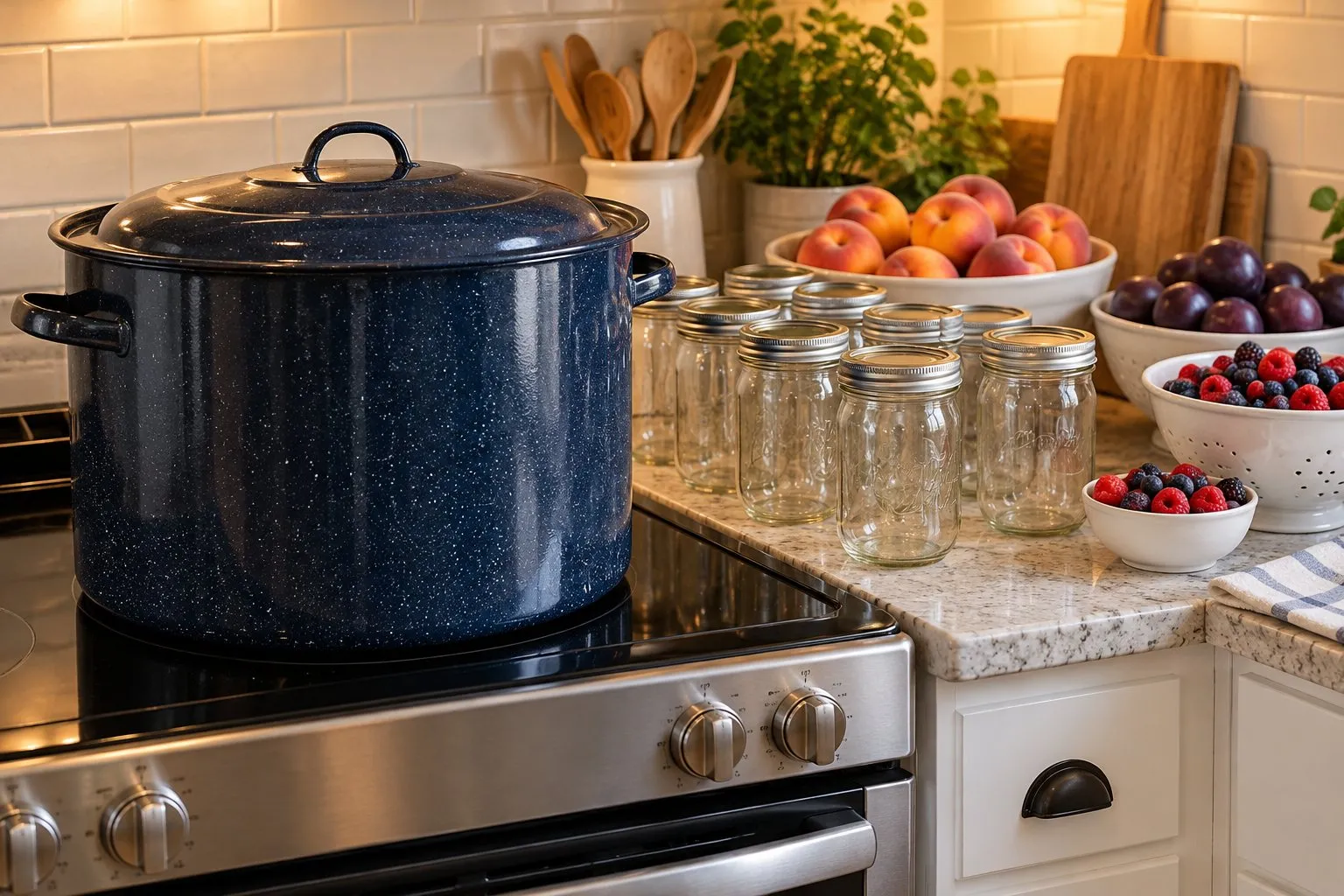
What do I need to know about each machine?
Ball EasyCanner, 21-quart
Ball says it holds up to 7 quart jars or 8 pint jars. Heat sensors keep the temperature steady. A built-in spigot drains the water into your sink, so you do not carry a heavy pot of hot water. It is also sold with multicooker and steaming functions, which causes some confusion.
Ball's catalog does not list the watts, and we read no manual. Ball's own product page blocked our request, so this all comes from the catalog page. It is in the upper mid-range price class.
The National Center for Home Food Preservation warns about electric multi-cookers. It makes an exception for the older Ball Automatic Home Canner, for high-acid foods only. It also says an electric boiling water canner from Jarden Home Brands and Weck's non-pressure units do not use pressure. It says to follow the maker's directions for them.
It does not name the EasyCanner. So we do not carry that exception over to this machine, which is sold with multicooker functions.
The Ball EasyCanner page has more.
The older "Ball Electric Canner" listing
An older Amazon listing has this title. We could not check which model it is, so we say nothing about its size or what it does. It may or may not be the Automatic Home Canner mentioned above. Check the model and its manual before you use it for any recipe.
24.5-quart and 27-quart no-name units
We know these two only from their Amazon listings. The listings give a volume and knob controls. One has a timer. The other has an LED display and automatic shut-off. Both are in the mid-range price class.
We read no maker's document, and we could not confirm how many jars they hold. A big volume does not tell you how many jars fit with enough water above them. Ask for the jar chart before you buy.
If a maker's manual matters to you, and for home canning we think it should, start with a machine that has one.
Others you may come across
- Presto 02161. Presto lists a 30-quart digital water bath canner. We have no Amazon listing or details for it, so we do not link it.
- Ball FreshTECH Automatic Home Canning System. Penn State says it is not a multi-cooker. It says it was designed and tested for the high-acid foods in its manual. Oregon State also says it is for high-acid use. We did not check whether it is still sold.
- Roots and Harvest. People search for this name. We read no maker's document, so we say nothing about these units.
Do I need a new machine?
Not necessarily. A plug-in unit is a convenience. Penn State says most pressure canners can double as a water bath canner. Presto says the same of its stovetop and digital canners, with limits on jar size.
If you plan to can low-acid food later, one stovetop pressure canner could do both jobs. The USDA does note that a separate boiling water canner is faster for high-acid foods.
Good reasons to buy a plug-in unit: you want your stove free, your kitchen gets too hot, or you would rather not lift a full pot.
What should I check before I buy?
- A jar chart from the maker. The quart size describes the pot, not the jars.
- Enough height for your jars. Water has to cover the jars, as your recipe says. Presto says its shorter pots are too short for quart jars in this method.
- A manual you can read. You want directions for the machine and a tested source for the recipe.
- Draining. Ball's spigot helps if lifting is hard for you.
- Space and outlet. Check your counter and the manual's rules for where to put it.
What mistakes do people make?
- Calling it a pressure canner. Some AI answers do this, even with recipes. A machine without pressure is not for low-acid food, whatever a chat answer says.
- Forgetting altitude. The National Center says to add time above 1,000 feet, because water boils at a lower heat there. The altitude page explains what changes between machines.
- Trusting a seal alone. A seal does not show that the food got hot enough. The botulism page has what the CDC and the National Center say.
- Using an Instant Pot instead. The experts differ on water bath use in those cookers. See our Instant Pot page.
Find your canner
A few questions about what you want to can and how much will point you to a place to start.
Find your canner in 3 quick questions
Question 1
What do you want to can?
Vegetables, meat, chicken and fish need a pressure canner. Jam, most fruit and pickles do not.
What should I do next?
For fruit, jams and pickles with a tested recipe, start with the Ball EasyCanner. It comes with numbers from its maker. If you also want to can low-acid food, look at the overview of canning machines first. One machine may do both.
What people ask
Can I can vegetables or meat in an electric water bath canner?
Not unless a tested recipe makes the food a high-acid food, as with some pickles. The USDA says low-acid foods must be canned in a pressure canner. The CDC says a boiling water canner will not protect against botulism in them. These machines do not build pressure.
Does the Ball EasyCanner build pressure?
No. Ball sells it as a water bath canner. Low-acid food needs a pressure canner, so it needs a different machine. Our Ball EasyCanner page covers this mix-up in more detail.
Do I need to adjust for altitude in an electric water bath canner?
Yes. The National Center for Home Food Preservation says to add time above 1,000 feet, because water boils at a lower heat there. Water bath canning always needs an altitude change, plug-in or not. Your tested recipe gives the times. This site gives none.
What about Roots and Harvest or FreshTECH machines?
We read no maker's document for Roots and Harvest units, so we say nothing about them. Penn State says the Ball FreshTECH Automatic Home Canning System was designed and tested for the high-acid foods in its manual. We did not check whether it is still sold.
Do I need an electric machine for water bath canning at all?
No. Penn State says most pressure canners can double as a water bath canner. A boiling water canner is just a large pot with a rack and a lid. A plug-in machine mainly frees up your stove. If you own a suitable pot, you may not need to buy anything.
Where this comes from
- Ball: EasyCanner catalog page (read November 2, 2026)
- USDA Complete Guide to Home Canning, revised 2015, Guide 1
- NCHFP: Canning in electric multi-cookers (February 1, 2019)
- NCHFP: Selecting the correct processing time
- Penn State Extension: Canning in electric multi-cookers (August 25, 2025)
- CDC: Home-canned foods and botulism (April 25, 2024)
More from the shelf
- Model profileBall EasyCannerThe Ball EasyCanner is a plug-in water bath canner for 7 quarts or 8 pints. It is not a pressure canner, so low-acid food does not belong in it.
- Buying guideElectric canner typesFour kinds of plug-in machine get called electric canners, and they do different jobs. See which can pressure can, which can't, and what the experts say.
- Buying guideStovetop cannersA stovetop pressure canner is the type the canning experts wrote their advice for. See dial vs weighted gauge, jar counts, stove fit and our pick.
- ExplainerAltitudeHigh altitude canning depends on your machine: USDA tables for stovetop canners, Presto's sensor claim, NESCO's regulators and water bath changes.
- ExplainerBotulismBotulism and home canning: why you can't judge a jar by its look or smell, the signs to throw food out, and the National Center's steps for a suspect jar.
Who writes here
electricpressurecanner.com Editorial Team
Machine comparisons & source reading
We are the editorial team at electricpressurecanner.com. We read manuals, spec sheets and the statements of NCHFP, USDA, CDC and Extension services, and we report who says what, with dates. No lab work happens here, and this site publishes no processing times or recipes of its own.
- Manuals and food-safety guidance read
- Sources and dates on every page
- No lab tests, stated openly
- No own processing times or recipes