Buying guide
Canning Books With Tested Recipes: The USDA Guide, Ball, and How to Check Any Cookbook
Start with the free USDA Complete Guide to Home Canning. The National Center for Home Food Preservation hosts it as PDFs, and Purdue Extension sells it in print. The CDC says to use only recipes and cookbooks that follow the steps in the USDA guide. So Easy to Preserve and the Ball books appear on university lists, but the lists name different editions. Check the edition before you buy.
Disclosure: This page contains affiliate links (marked with *). If you buy through them, we earn a small commission at no extra cost to you. As an Amazon Associate I earn from qualifying purchases. Learn more
The short answer
The USDA Complete Guide, 2015 revision, comes first and is free from the National Center for Home Food Preservation. So Easy to Preserve and the Ball books appear on university lists, with different editions named. For any other cookbook, the CDC's test is simple: its recipes should follow the steps in the USDA guide. We have not read the Ball books, so we name no favorite.
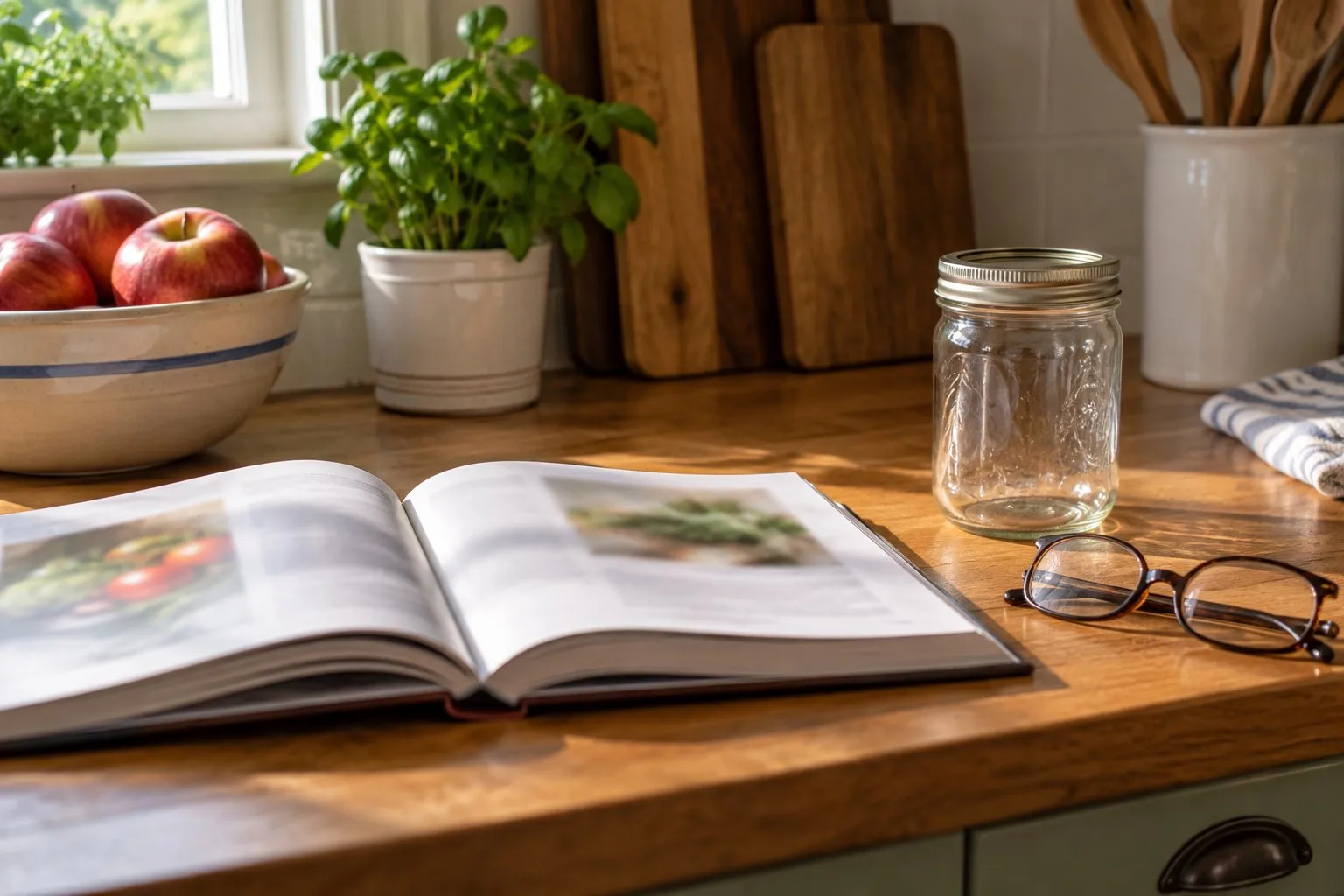
A well-thumbed, slightly sticky canning book is one of the real pleasures of this hobby. The trick is choosing one you can rely on. Books last much longer than the advice in them.
Which book should I start with?
Download the free USDA guide first, because every other source points back to it. For a printed recipe book on the counter, choose So Easy to Preserve or a current Ball book. Check the edition against the lists below. Keep your canner's manual beside it.
We publish no recipes ourselves. The tested recipes page covers the free online sources.
We have not read the Ball books, and our only product link for one comes from a seller's listing. So we name no favorite. How we compare explains why a listing counts for less than a document we have read.
Which books are on the lists?
| Book | What the sources say | Where to get it |
|---|---|---|
| USDA Complete Guide to Home Canning, 2015 revision | The National Center calls it the 2015 revision, in eight files. The CDC names it as a reliable source. UC El Dorado and UC Orange County both list it | Free PDFs from the National Center. Print through Purdue Extension's Education Store |
| So Easy to Preserve, sixth edition | University of Georgia Extension, 388 pages, covering canning, pickling, jams, freezing and drying. UC El Dorado gives the year as 2014, and UC Orange County as 2020. K-State lists it | University of Georgia |
| Ball Complete Book of Home Preserving | UC El Dorado lists 2024. UC Orange County lists 2012 and 2020 | Bookshops, or the listing below |
| Ball Blue Book Guide to Preserving | UC El Dorado lists 2024. UC Orange County lists 2014, edition 37. Oregon State says the latest | Bookshops |
| All New Ball Book of Canning and Preserving | UC El Dorado lists 2023. It is not on the UC Orange County list | Bookshops |
The lists differ, and we do not pick a winner. They were written at different times. UC Orange County's page shows no date, so it may simply be older than the newer printings. It does say plainly that not all Ball books are approved by its program, only the listed editions.
If your edition is on neither list, ask your state's university extension office (free local food-safety advice).
One note on So Easy to Preserve. UC Orange County says copies of the sixth edition printed before 2020 need the "2020 corrections," which the University of Georgia offers. If you find a used copy, look for those.
Why does the edition matter?
Canning advice changes as the research does. Presto's manual for the 16-quart and 23-quart says advice published before 2015 may be wrong and could be a serious health risk.
K-State says family recipes passed down over the years may be unsafe under current research. The problems can be low acidity, the wrong method or too short a time.
A treasured older book can stay on the shelf for its stories and handwriting. For the recipes, compare it with a current source first.
How can I check any cookbook?
We cannot vouch for every title in a bookshop or online. These questions come from the sources. They will help you judge one yourself.
- Does it follow the USDA guide? This is the CDC's own test. The CDC says to use only recipes and cookbooks that follow the USDA guide's steps. It also says not to use other recipes, even from a trusted friend or family member.
- Does it name its source? A recipe from the USDA, the National Center or an extension office can be checked at the source. Penn State says safe processing times come from heat testing in filled jars, which takes a long time and costs a lot. So a book with a great many unusual recipes deserves a closer look.
- Does it use a recommended method? The National Center says open-kettle canning is not recommended. Neither is processing freshly filled jars in ovens, microwaves or dishwashers. A book that teaches those is out of step with it.
- Does it send low-acid food to a pressure canner? Low-acid foods are red meat, seafood, poultry, milk and all fresh vegetables except most tomatoes. The USDA says they must be canned in a pressure canner. Our low-acid guide explains this.
- Does it deal with altitude? The USDA says canners must be run at higher pressure for the listed altitude ranges. A book that never mentions altitude leaves out something you may need. See our altitude page.
- How does it talk about approval? The USDA doesn't approve any canner. If a cover or listing leans on approval, check what it really means. Search listings can also mix established guides with recent self-published titles. Look up the author and publisher.
Does a book change what the machine is?
No. A trustworthy recipe book does not make a machine suitable. The National Center for Home Food Preservation does not support USDA canning steps in electric multi-cookers, including those with canning buttons. A recipe from any book does not change that. Our Instant Pot page explains why.
What if I have a Presto digital canner?
The experts disagree about which recipes to use, and we do not settle it.
- Presto's FAQ says tested stovetop recipes work.
- The National Center, through K-State, and Penn State say to follow only the manual. K-State's reason is that the booklet lacks at least two special USDA processes.
- NDSU says to use tested recipes from the National Center or your extension office.
- The manual for the 02153 and 02154 names the National Center, your local extension or Presto's own book as reliable recipe sources.
K-State's objection dates from 2021. We have not checked it against the revised manuals.
Read your current manual. Ask Presto's Consumer Service before you go outside it. The Presto Precise page has more.
Do you show a Ball book?
Ball
Ball Complete Book of Home Preserving
A printed preserving book, known to us from its Amazon listing and from a university list.
Seller data only: We only have the Amazon listing for this product. We list it as an option, not as a recommendation.
- Type
- Book on home preserving, according to the seller
Why here: Not our pick, since we have not read this book. We could not confirm which edition this listing ships, so check its copyright date against the lists above.
Best for: You want a book on the counter next to the free USDA guide and your canner's manual.
- On the safe preserving list of the UC Master Food Preservers of El Dorado County
- We did not read the book, so we say nothing about single recipes
- Check that you get a current edition
- It does not replace your canner's manual
We show this one because readers often look for it, and some editions are on the university lists above. We did not check the reprints of the USDA guide sold by other sellers. For that title we would use the free PDF or Purdue's print copy.
If you are stocking up, our canning tools page covers the rest of the kit. Our overview of all machines helps if you are still choosing a canner.
What people ask
Is the Ball Complete Book of Home Preserving a reliable source?
It is on two university program lists. UC Master Food Preservers of El Dorado County list the 2024 edition. UC Master Food Preservers of Orange County list the 2012 and 2020 editions. We have not read it, so we say nothing about single recipes. Check the edition, and follow your canner's manual too.
Is an old Ball Blue Book still good to use?
Be careful with it. UC El Dorado County lists a 2024 edition. UC Orange County lists the 2014 edition 37. Oregon State says to use the latest one. Orange County also says not all Ball books are approved. An old copy is a lovely keepsake. Check its recipes against a current source.
Where can I get the USDA Complete Guide to Home Canning?
The National Center for Home Food Preservation offers the 2015 revision free as PDFs, in eight files. For a printed copy, it says Purdue Extension's Education Store sells the print edition and handles all purchase questions. Reprints from other sellers exist. We did not check them, so the free PDF or Purdue's copy is the plain choice.
How can I tell if a canning cookbook is unsafe?
We cannot certify any book, but you can check it. The CDC says recipes and cookbooks should follow the steps in the USDA guide. Look for a current date, a named tested source, and altitude changes. Be wary of methods the National Center says are not recommended, such as open-kettle or oven processing.
Where this comes from
- NCHFP: About the USDA Guide to Home Canning, 2015 revision
- UCCE Master Food Preservers of El Dorado County: Safe preserving resources (July 2025)
- UC Master Food Preserver Program of Orange County: Food preservation resources
- CDC: Home-canned foods and botulism (April 25, 2024)
- K-State Research and Extension: Are old canning recipes safe? (June 25, 2026)
- University of Georgia Extension: So Easy to Preserve
More from the shelf
- ExplainerTested recipesWe publish no canning recipes. Here is where tested ones live: the USDA guide, the National Center, your extension office and your manual.
- Buying guideCanning toolsThe canning supplies the USDA's steps actually name, the extras that make the job nicer, and what to skip. Includes our pick for a tool set.
- How-toCanner manualsWhere to find the official Presto and NESCO pressure canner manuals, what we could not open for Ball, and why your own manual comes first.
- ExplainerLow-acid foodsWhat counts as a low-acid food: the USDA's pH 4.6 line, which foods fall on each side, why tomatoes and figs are special, and what it means for you.
- About this siteHow we compareHow this site compares plug-in canners: we read manuals and expert advice, run no lab tests, give no processing times, and say when sources disagree.
Who writes here
electricpressurecanner.com Editorial Team
Machine comparisons & source reading
We are the editorial team at electricpressurecanner.com. We read manuals, spec sheets and the statements of NCHFP, USDA, CDC and Extension services, and we report who says what, with dates. No lab work happens here, and this site publishes no processing times or recipes of its own.
- Manuals and food-safety guidance read
- Sources and dates on every page
- No lab tests, stated openly
- No own processing times or recipes