Explainer
Low-Acid Foods and Canning: The pH 4.6 Line in Plain Words
This low acid foods list starts with one rule. Low-acid foods have a pH above 4.6. They include red meat, seafood, chicken, milk and all fresh vegetables except most tomatoes. The USDA says they must be canned in a pressure canner. Fruit, pickles, jam and jelly are on the high-acid side. Tomatoes and figs need acid added first.
The short answer
Low-acid foods have a pH above 4.6: red meat, seafood, chicken, milk and all fresh vegetables except most tomatoes, says the USDA. They must be canned in a pressure canner. The CDC says pressure canning is the only recommended method for them, and a boiling water canner does not protect against botulism in these foods.
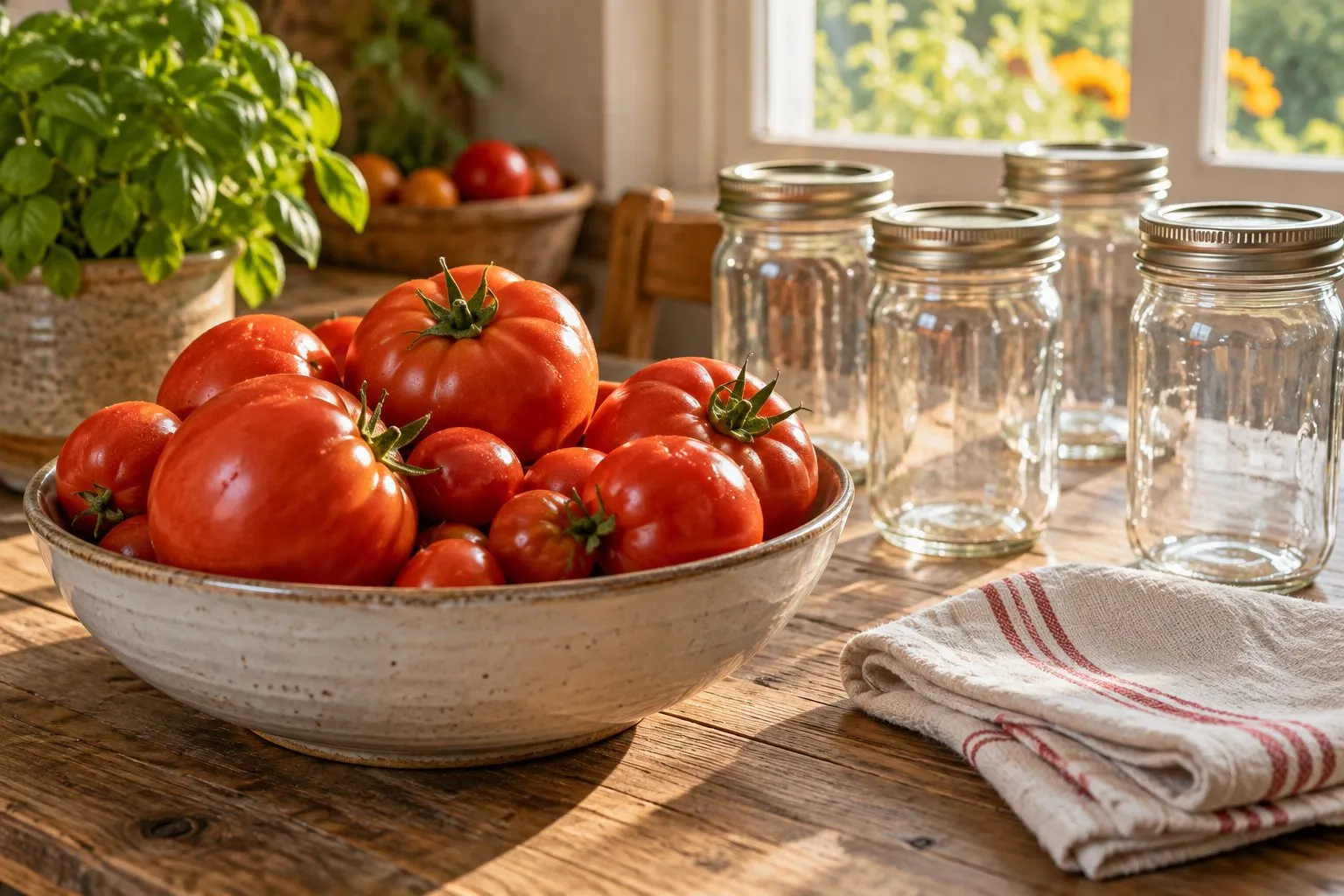
If you're new to canning, this is the one idea that makes everything else fall into place. Once you know which side of the line a food is on, you know which kind of canner it needs.
Which foods are low-acid?
- Red meat, chicken, seafood: low-acid. Pressure canner (USDA, CDC).
- Milk: low-acid, says the USDA. But being on the list doesn't mean a home process exists. See what you can pressure can.
- All fresh vegetables except most tomatoes: low-acid. Pressure canner (USDA, CDC).
- Figs: slightly above 4.6. Add lemon juice or citric acid if you can them as a high-acid food (USDA).
- Tomatoes: usually high-acid, but some are slightly above 4.6. Same acid step (USDA, National Center).
- Mixes of low-acid and high-acid foods: usually low-acid, unless the recipe has enough lemon juice, citric acid or vinegar (USDA).
- Fruit: high-acid. The USDA recommends a boiling water canner because it's faster.
- Pickles, sauerkraut: high-acid. Boiling water canner, by tested recipe (USDA).
- Jam, jelly, marmalade, fruit butter: high-acid. Boiling water canner, by tested recipe (USDA).
The CDC's list says the same thing with slightly different examples. It adds figs and "some tomatoes" to the low-acid group. The two agree on what matters.
Why is 4.6 the line?
The USDA explains it with one germ. Low-acid foods are not acidic enough to stop Clostridium botulinum from growing. It can cause botulism, a deadly kind of food poisoning. High-acid foods have enough acid to block its growth, or to kill it faster when heated.
The spores are harmless on fresh food, because they only grow without air. A sealed jar of moist, low-acid food at room temperature gives them what they need. Our botulism page reports what the CDC and the National Center for Home Food Preservation (the US canning experts at the University of Georgia, "the National Center" from here on) say about the illness.
Temperature then decides the canner. The USDA says the spores are very hard to kill at boiling-water temperatures. Low-acid foods should be heated to 240° to 250°F, which pressure canners can reach. It adds that pressure itself doesn't kill germs. High heat held long enough does.
Which foods catch people out?
Tomatoes
Tomatoes feel acidic, and most are. But the USDA says some are slightly above 4.6. So tested tomato recipes add lemon juice or citric acid. The National Center says the acid is required even when a recipe offers a pressure option, because those options were not made for tomatoes without added acid. The amounts belong to the recipe, so take them from the National Center's tomato section.
Figs
They look like fruit, and fruit is usually high-acid. But the USDA says figs are also slightly above 4.6, so they need the same acid step.
Salsa, relish and other mixes
The USDA says most mixes of low-acid and high-acid foods stay above 4.6 unless the recipe has enough acid. That's why the exact recipe matters so much. The National Center says you can make your own salsa only with a recipe scientifically tested for that exact mix. The tested recipes page shows where those live.
Pickled vegetables
Green beans in plain water are low-acid. Dilled beans from a tested recipe are not, because of the vinegar. Penn State explains the difference. The National Center says adding vinegar to fresh vegetables on your own is no shortcut. If this is you, read canning without a pressure canner.
What doesn't "low-acid" tell you?
- It says nothing about the time. That depends on the food, how it's packed and the jar size, says the USDA. We publish no times. Your tested recipe and your canner's manual do.
- It doesn't mean any pressure machine will do. The National Center's instructions were written for stovetop canners holding four or more quart jars upright. The CDC says not to use electric multi-cookers. See Instant Pot canning.
- It doesn't mean a process exists. Pumpkin puree is low-acid, and the National Center says the research to set a safe home method was never done. See what you can pressure can.
- You can't judge it by eye or taste. The National Center says spoiled low-acid food may show little or no sign. Never taste a suspect jar. A seal does not show that the food got the heat it needed.
What does this mean when you choose a canner?
If you only make jam, fruit and pickles from tested recipes, a boiling water canner may be all you need. If beans, carrots, corn, meat or stock are in your plans, you need a pressure canner. Start with our stovetop canner guide. It's a simple line once you've seen it, and now you have.
What people ask
What are low-acid foods?
Foods with a pH above 4.6, which is not acidic enough to stop the germ that causes botulism. The USDA names red meat, seafood, chicken, milk and all fresh vegetables except most tomatoes. The CDC's list also names figs and some tomatoes. Most mixes of low-acid and high-acid foods count as low-acid too.
Are tomatoes low-acid or high-acid?
Usually high-acid, but not always. The USDA says some tomatoes are slightly above 4.6, so they must have lemon juice or citric acid added when canned as high-acid foods. The National Center says the added acid is still needed when a tomato recipe offers a pressure option.
Are all vegetables low-acid?
All fresh vegetables except most tomatoes, says the USDA. Pickled vegetables are different, because a tested recipe makes them acidic with enough vinegar. Penn State names dilled beans and corn relish as examples. That only works if you follow the tested recipe exactly.
Can I make a low-acid food safe by adding a little vinegar?
Not on your own. The National Center says adding vinegar to fresh vegetables does not allow a shorter process in a boiling water bath. The USDA says a mix stays low-acid unless its recipe has enough acid. Penn State says changing ingredients can make a new product that needs its own testing.
Where this comes from
- USDA Complete Guide to Home Canning, revised 2015, Guide 1
- CDC: Home-canned foods and botulism (April 25, 2024)
- NCHFP: Ensuring safe canned foods
- NCHFP: Canning tomatoes, introduction
- NCHFP: Vegetables and fruits canning FAQs
- Penn State Extension: No pressure, corn and green bean relishes (October 8, 2026)
More from the shelf
- ExplainerWhat can you pressure canYou can pressure can vegetables, meat, chicken and seafood that have a tested USDA process. Which foods are covered, which have none, and where to check.
- ComparisonWater bath vs. pressureWater bath canning is for high-acid foods, pressure canning for low-acid foods. The USDA draws the line at pH 4.6. Here is why, and where tomatoes fit.
- ExplainerBotulismBotulism and home canning: why you can't judge a jar by its look or smell, the signs to throw food out, and the National Center's steps for a suspect jar.
- Question & answerCan You Can Green Beans Without a Pressure Canner? No, and What to Do InsteadPlain green beans need a pressure canner, says the USDA. Why boiling water, steam and oven methods fall short, and what works: freezing and pickled recipes.
- Buying guideStovetop cannersA stovetop pressure canner is the type the canning experts wrote their advice for. See dial vs weighted gauge, jar counts, stove fit and our pick.
Who writes here
electricpressurecanner.com Editorial Team
Machine comparisons & source reading
We are the editorial team at electricpressurecanner.com. We read manuals, spec sheets and the statements of NCHFP, USDA, CDC and Extension services, and we report who says what, with dates. No lab work happens here, and this site publishes no processing times or recipes of its own.
- Manuals and food-safety guidance read
- Sources and dates on every page
- No lab tests, stated openly
- No own processing times or recipes