Comparison
Water Bath vs. Pressure Canning: Which Foods Need Which
Pressure canner vs water bath: the food decides. High-acid foods (jam, most fruit, pickles) can go in a boiling water canner. Low-acid foods (vegetables, meat, chicken, fish) must go in a pressure canner, because botulism spores survive boiling. The USDA draws the line at pH 4.6. Tomatoes and figs need added acid to count as high-acid.
Disclosure: This page contains affiliate links (marked with *). If you buy through them, we earn a small commission at no extra cost to you. As an Amazon Associate I earn from qualifying purchases. Learn more
The short answer
Low-acid foods have a pH above 4.6: red meat, seafood, chicken, milk and all fresh vegetables except most tomatoes. The USDA says they must be canned in a pressure canner. High-acid foods can go in a boiling water canner. The CDC says pressure canning is the only recommended method for low-acid foods, and a boiling water canner does not protect against botulism in them.
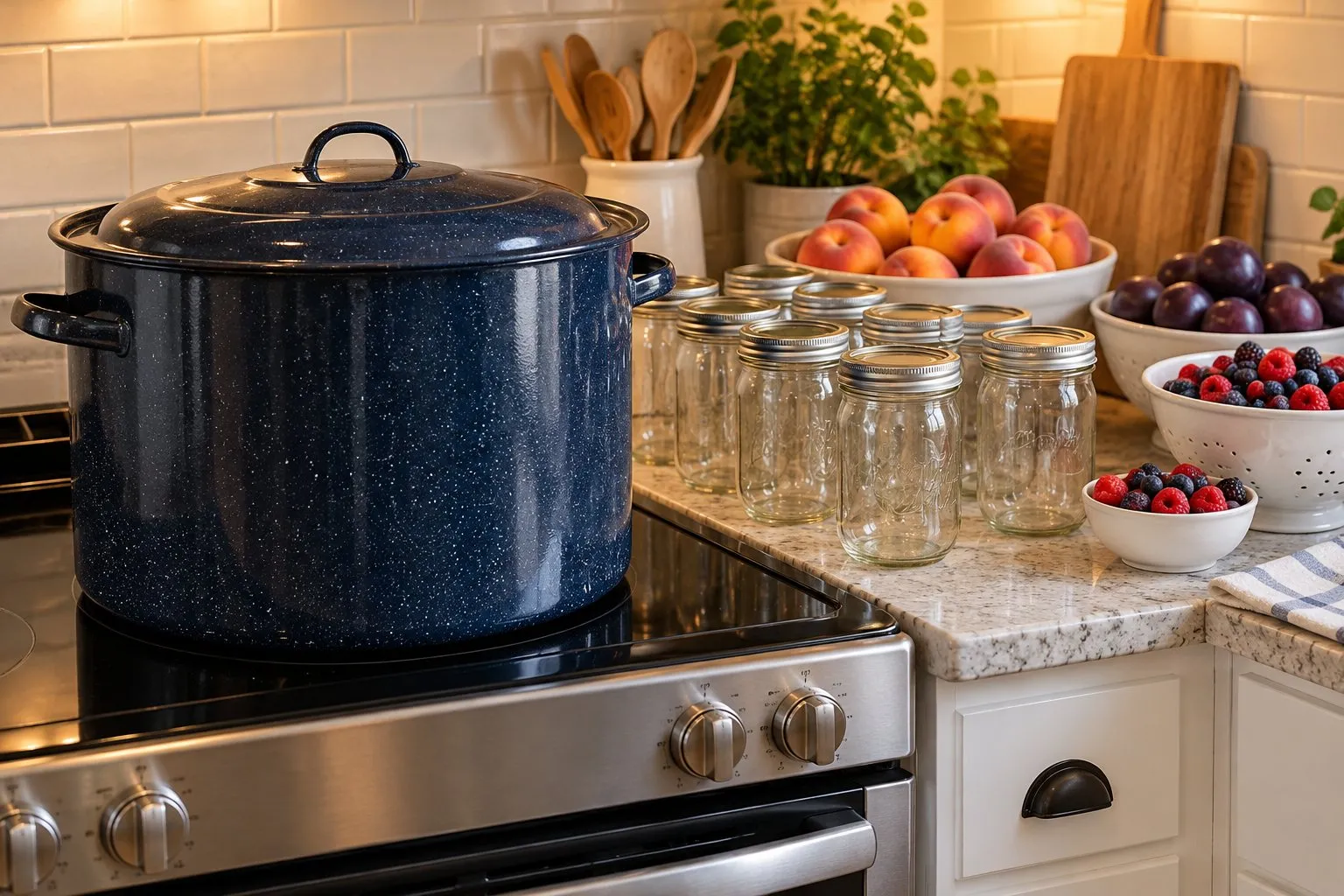
This is the first question every home canner has to answer, and the rule is friendlier than it looks. You don't need to memorize a chart of foods. You need to know one line, and to follow a tested recipe on the right side of it.
What's the short answer?
| Water bath (boiling water) | Pressure canning | |
|---|---|---|
| For | High-acid foods, pH 4.6 or lower | Low-acid foods, pH above 4.6 |
| Examples (USDA) | Fruit, pickles, sauerkraut, jam, jelly, marmalade, fruit butter | Red meat, seafood, chicken, milk, all fresh vegetables except most tomatoes |
| Heat | Boiling water | 240°F to 250°F |
| Equipment | Tall pot with a rack, or an electric water bath canner | Pressure canner with a vent and a gauge or sensor |
| Times and pressures | From your tested recipe | From your tested recipe |
Altitude changes both. For water bath, the time changes. For a stovetop pressure canner, the pressure changes. See canning at altitude.
Some foods sit in between:
- Tomatoes and figs: water bath only when acid is added as a tested recipe says. The USDA says some are slightly above pH 4.6.
- Pickled vegetables: water bath only with a tested pickling recipe. The recipe adds the acid. A plain vegetable is low-acid.
- Mixes of low-acid and high-acid foods: go by the tested recipe. Without enough added acid they count as low-acid. The USDA says most such mixes are above 4.6 unless the recipe has enough lemon juice, citric acid or vinegar.
We publish no times, pressures or recipes, on purpose. Your tested recipe gives those. Where to find tested recipes has the sources. Our low-acid foods list goes further into which foods fall where.
Why isn't boiling enough?
The worry is Clostridium botulinum, the germ behind botulism. The USDA says its spores are very hard to kill at boiling-water temperatures. The hotter the canner, the easier they die. High-acid foods have enough acid to block the germ or kill it faster when heated. Low-acid foods don't.
Water in an open pot stops getting hotter once it boils. A pressure canner traps steam, and that lets it get hotter. The USDA is careful here: pressure itself doesn't kill germs. High heat held long enough does. The CDC says a boiling water canner does not protect against botulism in low-acid foods, so boiling longer is no way around it. The botulism page has more.
Have no pressure canner and a basket of green beans? Our page on canning without a pressure canner has honest alternatives.
How do the two methods compare?
- What you can can. A pressure canner is the wider tool. It's required for low-acid food, and some pots double as water bath canners when used without pressure. A water bath canner handles high-acid foods only.
- Speed. The USDA recommends boiling water canners for high-acid foods because they're faster. A pressure canner adds venting, building pressure and cool-down.
- Attention. A water bath needs jars covered with water and a steady boil. A stovetop pressure canner needs venting, careful watching of pressure, and a cool-down you can't rush. The USDA warns that force-cooling the canner may result in unsafe food.
- Learning curve. Water bath is the usual place to start. A pressure canner has more steps, and your manual walks you through them. How to use a pressure canner gives the overview.
- Choosing a process. The National Center for Home Food Preservation (the US canning experts at the University of Georgia) says the right process depends on the food's acidity, the canner type, how it's packed, the jar size and your altitude. That's why one number can't travel from recipe to recipe.
Which machine does which?
Machines sold for canning aren't all the same type, so be sure which one you have.
- Stovetop pressure canner: both methods on many models. Presto says the 01781 holds quart jars in both.
- Plug-in canner made just for canning: the Presto Precise is sold for both, with limits by size on our electric canner sizes page. The USDA and the National Center approve no canner of any kind. Nobody outside the company has published test results for it.
- Electric water bath: the Ball EasyCanner. It has no pressure setting.
- Electric multi-cooker: not a pressure canner. See canning in an Instant Pot.
Which machine does what sorts all five types.
Pressure canner or water bath: which one for you?
Which one, then?
If you want to can vegetables, meat, poultry or seafood → Presto 23-Quart Stovetop (01781)
View(paid link to Amazon, opens in a new tab)Ad · paid link · check price & delivery on AmazonIf you want a stovetop pot that can do both methods → Presto 23-Quart Stovetop (01781)
View(paid link to Amazon, opens in a new tab)Ad · paid link · check price & delivery on AmazonIf you only make jams, fruit and pickles, and want the pot off the stove → Ball EasyCanner
View(paid link to Amazon, opens in a new tab)Ad · paid link · check price & delivery on AmazonIf you only make jams, fruit and pickles and already own a tall pot
If you would rather plug in for both methods
For most readers who want a shelf of garden vegetables, a stovetop pressure canner is where we'd begin, since it handles both sides of the line. If you'll only ever can jam, a water bath is simpler. Either way, start small, with one tested recipe and a manual beside you.
What people ask
What is the difference between water bath and pressure canning?
Temperature. Water bath canning holds jars in boiling water, which can't get hotter than boiling. A pressure canner traps steam, which lets it reach the 240°F to 250°F the USDA says low-acid foods need. The USDA adds that heat and time, not pressure itself, kill germs.
Can I water bath green beans or meat if I process them longer?
No. The USDA says low-acid foods must be canned in a pressure canner. The CDC says pressure canning is the only recommended method for them. A boiling water canner does not protect against botulism in them. If you have no pressure canner, our page on canning without one has other options.
Can I use a pressure canner for water bath foods?
The USDA says pressure canners may be used for high-acid foods too, but it recommends boiling water canners because they're faster. Some pots double as boiling water canners. Presto says its 01781 does this for quarts and smaller. Either way, use a recipe tested for the method you choose.
Can I use an electric pressure cooker instead of a water bath or pressure canner?
No. An electric multi-cooker is not a pressure canner. The National Center for Home Food Preservation does not support USDA canning instructions in them, even with canning buttons. The CDC says not to use them for low-acid foods. Our Instant Pot page has the details.
Do the Amish use pressure canners?
We found no solid source on what Amish households do, so we leave that open. It wouldn't change the answer. A tradition is not a tested process. The USDA's method for low-acid food is a pressure canner, whoever is canning.
Where this comes from
More from the shelf
- ExplainerLow-acid foodsWhat counts as a low-acid food: the USDA's pH 4.6 line, which foods fall on each side, why tomatoes and figs are special, and what it means for you.
- Buying guideElectric water bathElectric water bath canners build no pressure, so they are only for tested high-acid recipes. See our pick and which listings to read with care.
- Buying guideStovetop cannersA stovetop pressure canner is the type the canning experts wrote their advice for. See dial vs weighted gauge, jar counts, stove fit and our pick.
- Question & answerCan You Can Green Beans Without a Pressure Canner? No, and What to Do InsteadPlain green beans need a pressure canner, says the USDA. Why boiling water, steam and oven methods fall short, and what works: freezing and pickled recipes.
- ExplainerTested recipesWe publish no canning recipes. Here is where tested ones live: the USDA guide, the National Center, your extension office and your manual.
Who writes here
electricpressurecanner.com Editorial Team
Machine comparisons & source reading
We are the editorial team at electricpressurecanner.com. We read manuals, spec sheets and the statements of NCHFP, USDA, CDC and Extension services, and we report who says what, with dates. No lab work happens here, and this site publishes no processing times or recipes of its own.
- Manuals and food-safety guidance read
- Sources and dates on every page
- No lab tests, stated openly
- No own processing times or recipes