Question & answer
Can You Can Green Beans Without a Pressure Canner? No, and What to Do Instead
Can you can green beans without a pressure canner? Not as plain canned green beans. The USDA says low-acid foods must be canned in a pressure canner, and fresh green beans are low-acid. You do have real options. Freeze them, or use a tested pickled recipe such as dilled beans. That's a different food with its own process.
Disclosure: This page contains affiliate links (marked with *). If you buy through them, we earn a small commission at no extra cost to you. As an Amazon Associate I earn from qualifying purchases. Learn more
The short answer
No. Plain green beans are low-acid, and the USDA says low-acid foods must be canned in a pressure canner. The CDC says a boiling water canner will not protect against botulism in these foods. The National Center for Home Food Preservation says adding vinegar to fresh vegetables doesn't change that. Freezing works, as do tested pickled recipes, which are made acidic on purpose.
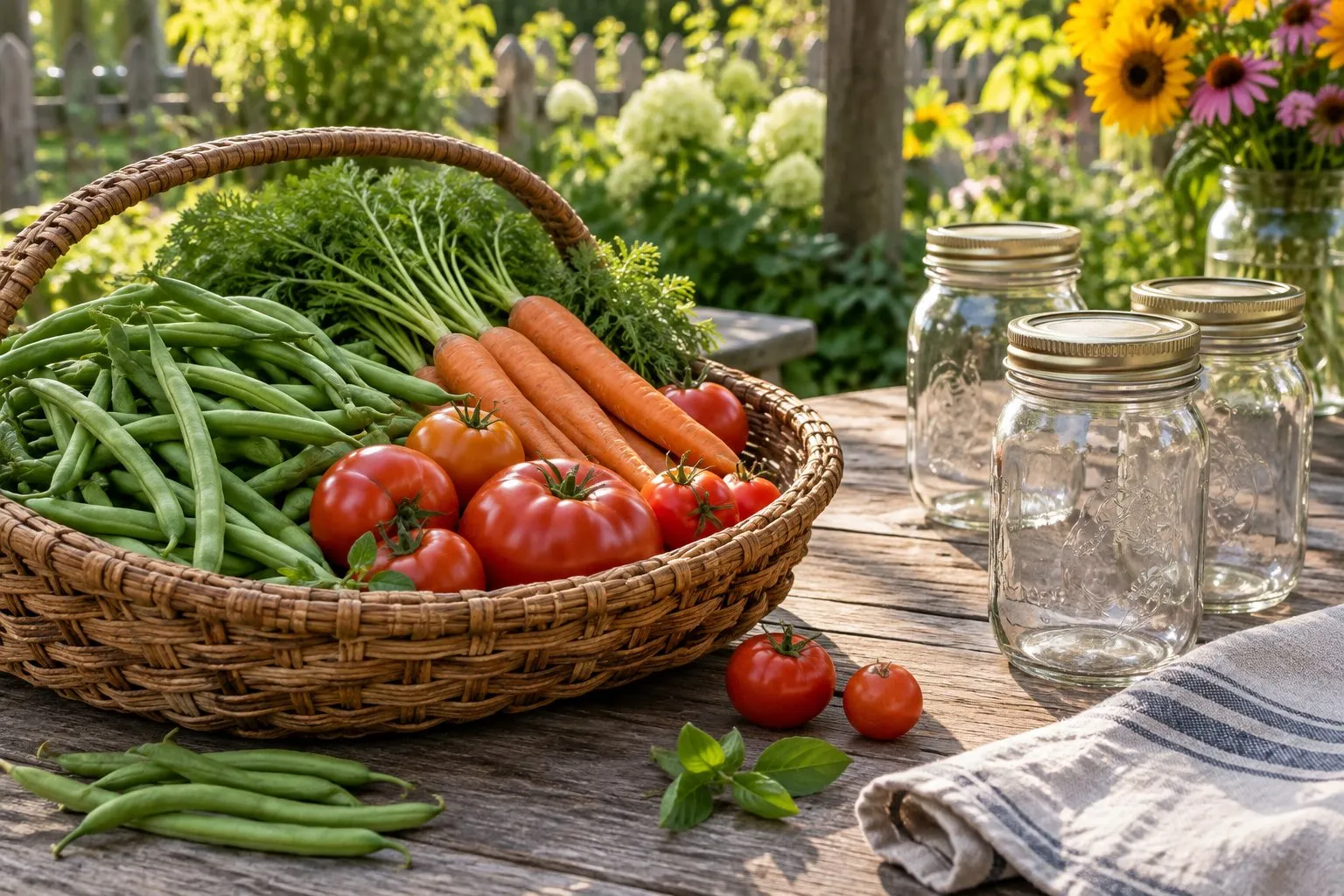
A garden full of green beans and no pressure canner is a very ordinary spot to be in, and it's good that you stopped to check. The beans will keep well another way. Here is why the shortcut fails, and what works instead.
Why do plain green beans need pressure?
The USDA's rule is short. Low-acid foods have a pH above 4.6, they include all fresh vegetables except most tomatoes, and they must be canned in a pressure canner to be free of botulism risks. Our page on low-acid foods explains the pH line.
The reason is heat. The spores behind botulism are very hard to kill at boiling temperature. The USDA says low-acid foods should be heated to 240° to 250°F, which a pressure canner reaches. Water in an open pot can't get that hot, however hard it boils. Penn State's snap bean guide says it by name. These beans can't be safely canned in a boiling water bath or a steam canner. They must go in a pressure canner.
An old family method that seemed fine is not a tested process. The CDC says home-canned vegetables are the most common cause of botulism outbreaks in the US. The botulism page has what the CDC and the National Center say.
Which shortcuts don't work?
- Boiling water canner. The CDC says not to use one for low-acid foods, because it will not protect against botulism.
- Vinegar added to plain beans in a water bath. The National Center says this does not allow a shorter process. Pickled recipes are a different case.
- Steam canner (a pot that uses steam, not pressure). The National Center's canning FAQs say these are only for naturally acidic or properly acidified foods. They aren't pressurized.
- Oven. The USDA doesn't recommend it. The National Center's FAQs say dry heat reaches jars slowly, and jars can explode.
- Open-kettle, dishwasher or microwave canning. The USDA doesn't recommend them, because they don't prevent all risks of spoilage.
- Aspirin or canning powder. The National Center says aspirin can't prevent spoilage. The USDA calls canning powders useless as preservatives.
- Electric multi-cooker. The CDC says not to use one, even with a canning button. See canning in an Instant Pot.
What works instead?
Freeze them
This is the simplest way. The National Center's freezing section includes green, snap and wax beans, and Penn State's snap bean guide covers it too. Blanch, cool and pack as those pages describe.
Use a tested pickled recipe
Penn State's article on corn and green bean relishes says plain beans and corn need a pressure canner. Dilled beans, pickled three bean salad and corn relish may go in a boiling water or steam canner. The vinegar in these recipes lowers the pH. The USDA's pickling guide and the National Center's pickling section hold the tested versions.
Follow these exactly. Penn State says changing the ingredients can make a new product that would need its own testing. The tested recipes page shows where to look.
Get a pressure canner when you're ready
If low-acid food will be a regular part of your year, a stovetop canner opens up beans, carrots, corn and meat. It's the type the National Center says its instructions were written for.
Presto
Presto 23-Quart Stovetop (01781)
A pot for your stove, the kind the USDA's canning steps were written for.
- Type
- Stovetop pressure canner with dial gauge
- Pressure canning
- Yes
- Water bath
- Yes, quarts and smaller, per Presto
- Liquid capacity
- 23 quarts
- Jars per load
- 7 quarts, or 20 regular-mouth pints stacked
- Altitude
- You raise the pressure by altitude from the USDA tables. Water bath times also change with altitude.
- Price class
- Mid-range
Stated in: Presto Canner Comparison Guide (2025), read 2 November 2026
Why here: If you decide to pressure can after all, this is our stovetop pick: 7 quart jars per Presto, in the mid-range price class.
Best for: You want to pressure can low-acid foods (vegetables, meat, chicken, fish) and can stay near the stove.
- The National Center's advice was written for stovetop canners
- Seven quart jars, or up to 20 regular-mouth pints stacked, says Presto
- Also works as a water bath canner for quarts and smaller, says Presto
- Works on gas and on electric coil and smooth-top ranges, says Presto
- You watch the gauge and adjust the heat yourself
- The dial gauge needs an accuracy test every year, says Presto
- Presto does not list induction for this pot. The 01784 is its induction version
Our stovetop canner guide compares the models.
What about other foods?
The answer follows the food, not the machine you own:
- Fruit, jam, pickles, sauerkraut: high-acid, so the USDA allows a boiling water canner. See water bath vs. pressure canning.
- Tomatoes: add acid, then a boiling water canner works, says the USDA.
- Meat, chicken, seafood, stock, most vegetables: low-acid. Pressure canner or freezer.
- Everything else: what you can pressure can lists what has a tested process, and what doesn't.
What if you already canned beans this way?
Please don't taste them to check. The National Center says never to taste a suspect jar, because spoiled low-acid food may show little or no sign. A good seal does not show that the food got the heat it needed. The National Center's page on handling suspect jars gives the steps for throwing them out. This happens to careful people, and you're doing the right thing by asking.
What people ask
Can I can green beans in a water bath if I add vinegar?
No. The National Center says adding vinegar to fresh vegetables does not allow a shorter process in boiling water. Pickled vegetables are a different case, because each tested recipe sets its own mix of vegetables and acid. Use a tested dilled bean recipe exactly as written, or pressure can plain beans.
What can I use if I don't have a pressure canner?
For low-acid foods, the experts point to the freezer. The National Center publishes freezing directions for vegetables, meat and chicken. Penn State says tested pickled recipes can also go in a boiling water or steam canner. High-acid foods such as jam and most fruit don't need a pressure canner at all.
Can I can tomatoes without a pressure canner?
Yes, with a tested recipe. The USDA says properly acidified tomatoes are high-acid foods and can go in a boiling water canner. The National Center adds that the acid must go in even when a recipe offers a pressure option. Take the amounts and times from the National Center or the USDA guide.
Can I can meat or chicken stock without a pressure canner?
No. The USDA names red meat and chicken as low-acid foods that must be canned in a pressure canner, and its meat stock process is in the same guide part. None of the sources we read gives a way to jar them without one. The National Center publishes directions for freezing meat and chicken, so start with the freezer.
Where this comes from
- USDA Complete Guide to Home Canning, revised 2015, Guide 1
- CDC: Home-canned foods and botulism (April 25, 2024)
- NCHFP: Vegetables and fruits canning FAQs
- Penn State Extension: No pressure, corn and green bean relishes (October 8, 2026)
- Penn State Extension: Let's Preserve, snap beans (August 4, 2023)
- NCHFP: Freezing
More from the shelf
- ExplainerLow-acid foodsWhat counts as a low-acid food: the USDA's pH 4.6 line, which foods fall on each side, why tomatoes and figs are special, and what it means for you.
- ComparisonWater bath vs. pressureWater bath canning is for high-acid foods, pressure canning for low-acid foods. The USDA draws the line at pH 4.6. Here is why, and where tomatoes fit.
- ExplainerBotulismBotulism and home canning: why you can't judge a jar by its look or smell, the signs to throw food out, and the National Center's steps for a suspect jar.
- Buying guideStovetop cannersA stovetop pressure canner is the type the canning experts wrote their advice for. See dial vs weighted gauge, jar counts, stove fit and our pick.
- ExplainerWhat can you pressure canYou can pressure can vegetables, meat, chicken and seafood that have a tested USDA process. Which foods are covered, which have none, and where to check.
Who writes here
electricpressurecanner.com Editorial Team
Machine comparisons & source reading
We are the editorial team at electricpressurecanner.com. We read manuals, spec sheets and the statements of NCHFP, USDA, CDC and Extension services, and we report who says what, with dates. No lab work happens here, and this site publishes no processing times or recipes of its own.
- Manuals and food-safety guidance read
- Sources and dates on every page
- No lab tests, stated openly
- No own processing times or recipes