Explainer
What Can You Pressure Can? Foods With a Tested Process, and Foods Without One
What can you pressure can? Foods that have a tested process: most vegetables, red meat, chicken, seafood, meat stock and some soups, as listed in the USDA Complete Guide to Home Canning. Being low-acid does not mean a process exists. Dairy, thickened foods, pumpkin puree and some vegetables have none that we could find, so the freezer is the usual answer.
The short answer
You can pressure can foods with a tested process, such as most vegetables, red meat, chicken, seafood, meat stock and broth-based soups in the USDA Complete Guide. Foods without one include mashed or pureed pumpkin and winter squash, plain summer squash, plain broccoli and cauliflower, and anything thickened or made with dairy, pasta or rice. Check your source before you start.
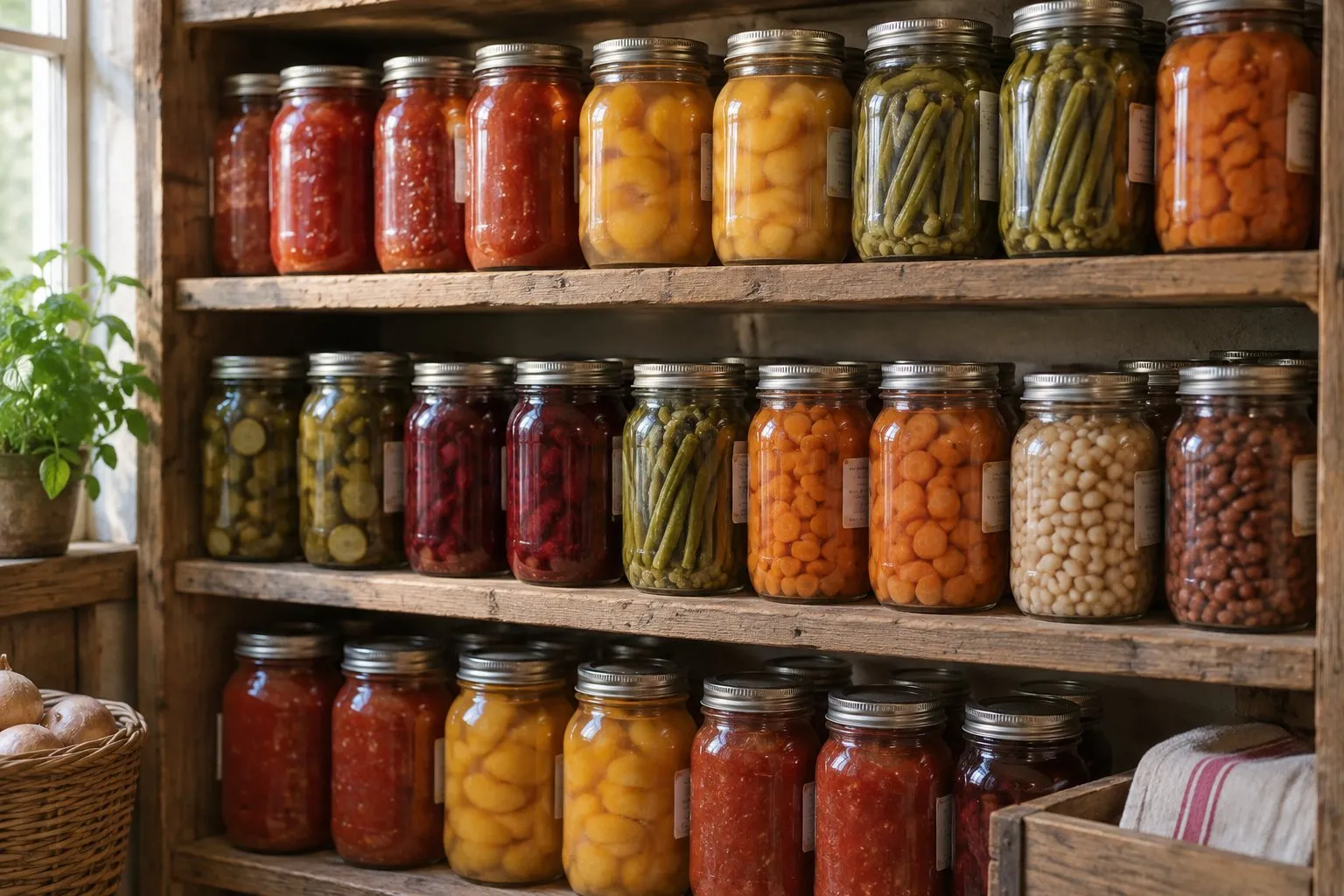
Many people come to canning with a garden or a freezer full of something and want to know if it can go in a jar. Often it can. The question to ask is whether a tested process exists for that food. This page helps you check.
We list foods here and leave the times, pressures and recipes to the sources. The tested recipes page shows where they live.
Which foods have a USDA process?
The best list we know is the index of the USDA guide. These foods sit in its vegetable part or its chicken, meat and seafood part. Each entry names the exact form it covers. The National Center for Home Food Preservation (the US canning experts at the University of Georgia, "the National Center" from here on) carries the same foods in its canning pages.
- Vegetables: asparagus, beets, carrots, corn (cream style and whole kernel), snap and Italian beans, fresh lima beans, shelled and dried beans or peas, green peas, mixed vegetables, mushrooms, okra, peppers, sweet and white potatoes, cubed pumpkin and winter squash, spinach and other greens, succotash
- Prepared beans: baked beans, dry beans with tomato or molasses sauce
- Soups: dried bean or pea, meat, chicken, seafood and vegetable soups, under one procedure with cautions
- Red meat and game: beef, lamb, pork, veal, venison and bear, plus meat stock and chile con carne
- Chicken and rabbit
- Seafood: clams, king or Dungeness crab, fatty fish, smoked fish, oysters, tuna
Read the form as well as the food. "Cubed pumpkin" does not cover pumpkin puree. "Whole or minced clams" means just that. One more note: the USDA says not to can wild mushrooms, and Presto's manual says the same.
Which foods have no process we could find?
Being low-acid does not mean a tested process exists. These are the ones people ask about most.
- Mashed or pureed pumpkin and winter squash: the National Center's instructions say do not mash or puree. It says the research to set safe methods was never done. Freezing works.
- Pumpkin butter: no research-based home canning advice, says the National Center. Keep it in the fridge briefly or freeze it.
- Plain summer squash and zucchini: older advice was withdrawn because the times could not be checked, says the National Center. Freeze, pickle or dry instead.
- Plain broccoli and cauliflower: no tested recipes, says Penn State. Freezing is the popular route. Pickled cauliflower has a tested recipe.
- Thickened soups, or soups with pasta, rice, flour, cream or milk: the USDA's soup procedure warns against adding these. Penn State says to add them at serving.
- Pumpkin, winter squash, broccoli or cauliflower soups: Penn State says don't can them. Freeze them.
- Dairy such as butter, milk, cream and cheese: low-acid. Penn State says to add it just before serving. The USDA's food index lists no process for it.
- Mashed or pureed sweet potatoes: no tested recipes, says Presto's manual for the 16-quart and 23-quart.
- Leftovers: Presto's manual says not to can them.
- Anything in half-gallon jars except apple or grape juice: no other research-tested process for that jar size, says the National Center's general FAQs.
If your food isn't on either list, don't guess. Look for it in the USDA guide, then ask your state's university extension office (free local food-safety advice).
Why might a process be missing?
A process is measured in the jar, for that food in that form. Penn State says this testing is slow and costly, so fewer tested recipes exist than people want. It also says a change in thickness or ingredients can make a new product. Pumpkin is the example. The only USDA-supported method is for cubes. The National Center says the research needed to set safe methods for puree was never done.
Does your machine matter?
The food list comes from USDA work. The National Center says that work was done for stovetop canners holding four or more quart jars upright. If you have a stovetop canner, how to use a pressure canner shows the steps.
Plug-in machines add a question. Presto says any food with a tested recipe can be canned in its digital canner. The National Center (through Kansas State) says to follow only the manual, since the booklet lacks at least two special USDA processes. North Dakota State says to use tested recipes from the National Center or your state's extension office. We report these and don't settle them. See your canner's manual. The National Center does not support USDA instructions in electric multi-cookers. The Instant Pot page explains.
What about high-acid foods?
Fruit, pickles, jam and most tomato products have their own tested recipes, usually for a boiling water canner. See water bath vs. pressure canning. The low-acid food guide explains the line. If you have no pressure canner yet, see canning without a pressure canner.
It's a long list, and most of what grows in a home garden is on it. That leaves you plenty to work with.
What people ask
What foods need to be pressure canned?
Low-acid foods (vegetables, meat, chicken, fish). The USDA names red meat, seafood, chicken, milk and all fresh vegetables except most tomatoes. Most mixes of low-acid and high-acid foods count too, unless the recipe adds enough acid. Milk is on that list, yet we found no home process for it.
What foods cannot be pressure canned?
Any food without a tested process. The National Center for Home Food Preservation says not to can mashed or pureed pumpkin or winter squash, and advises against summer squash. Penn State says plain broccoli and cauliflower have no tested recipe. It says dairy, pasta, rice and thickeners are added at serving. The freezer is usually the answer.
What vegetables cannot be canned?
Plain summer squash and zucchini, says the National Center. Its older advice was withdrawn when the times could not be checked. Penn State says plain broccoli and cauliflower have no tested recipe. Pumpkin and winter squash have a process for cubes only. Pickled recipes are a separate matter.
Can you pressure can high-acid foods too?
The USDA says pressure canners may be used for high-acid foods (jam, most fruit, pickles). It recommends boiling water canners because they're faster. Some USDA tomato recipes offer both. The National Center says the added acid is still required with the pressure option, so follow the recipe as written.
Where this comes from
- USDA Complete Guide to Home Canning, revised 2015, Guide 1 and index of foods
- USDA Complete Guide to Home Canning, revised 2015, Guide 4 (vegetables)
- NCHFP: Vegetables and fruits canning FAQs
- Penn State Extension: Preserving soup safely (October 13, 2025)
- Penn State Extension: Preserving broccoli and cauliflower (August 24, 2026)
- NCHFP: General canning FAQs
More from the shelf
- ExplainerTested recipesWe publish no canning recipes. Here is where tested ones live: the USDA guide, the National Center, your extension office and your manual.
- ExplainerLow-acid foodsWhat counts as a low-acid food: the USDA's pH 4.6 line, which foods fall on each side, why tomatoes and figs are special, and what it means for you.
- ComparisonWater bath vs. pressureWater bath canning is for high-acid foods, pressure canning for low-acid foods. The USDA draws the line at pH 4.6. Here is why, and where tomatoes fit.
- Question & answerCan You Can Green Beans Without a Pressure Canner? No, and What to Do InsteadPlain green beans need a pressure canner, says the USDA. Why boiling water, steam and oven methods fall short, and what works: freezing and pickled recipes.
- How-toHow to use a cannerHow to use a pressure canner on the stove: checking, loading, letting air out, holding pressure and cooling. Figures are left to your recipe.
Who writes here
electricpressurecanner.com Editorial Team
Machine comparisons & source reading
We are the editorial team at electricpressurecanner.com. We read manuals, spec sheets and the statements of NCHFP, USDA, CDC and Extension services, and we report who says what, with dates. No lab work happens here, and this site publishes no processing times or recipes of its own.
- Manuals and food-safety guidance read
- Sources and dates on every page
- No lab tests, stated openly
- No own processing times or recipes